Deadlift
Also called: Barbell deadlift, Conventional deadlift
Lifting a loaded barbell from the floor to standing, using the hips and legs while the back stays straight. It works more muscles at once than almost any other lift, from the legs and glutes to the back and grip. Learn the hinge with light weight before adding load.
Muscles & essentials
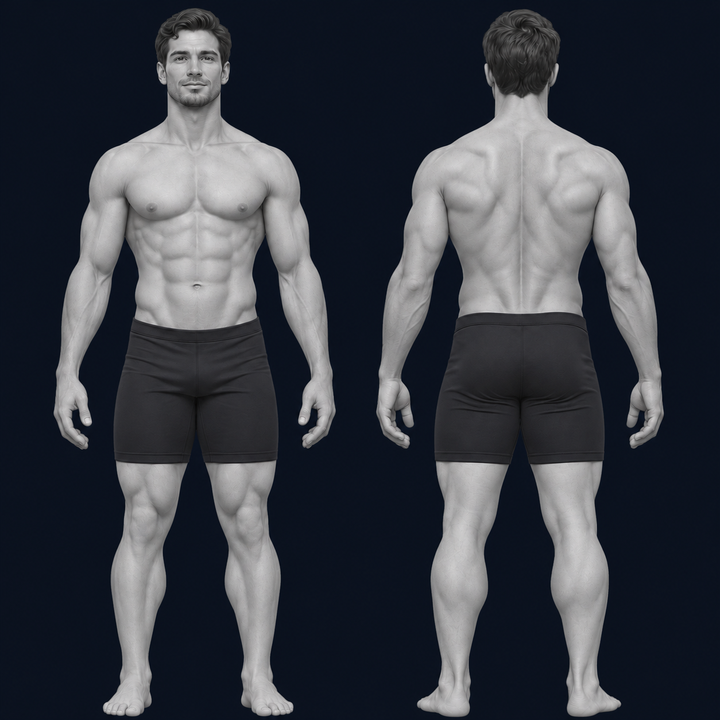
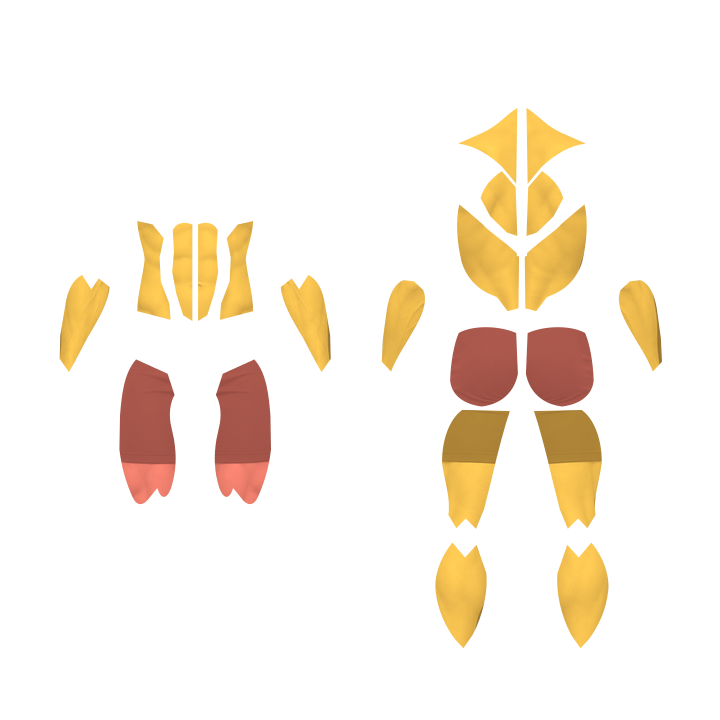
- Primary muscles
- glutes, quadriceps
- Supporting muscles
- hamstrings, lower back, abdominals, forearms, lats, middle back, traps, calves
- Difficulty
- Intermediate
- Equipment
- Barbell
Muscle groups are a general guide. Difficulty describes coordination and skill, not workout intensity.
How to do the deadlift
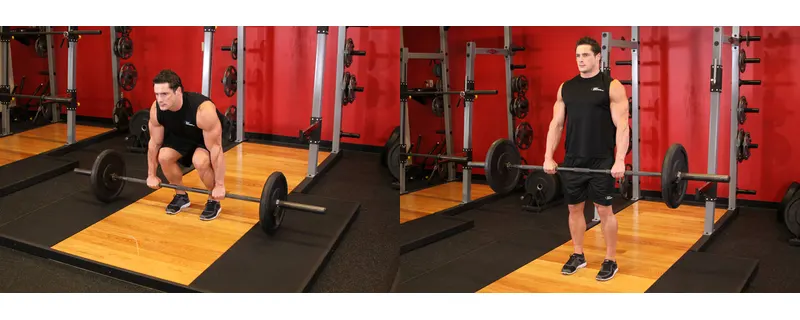
- Stand in front of a loaded barbell.
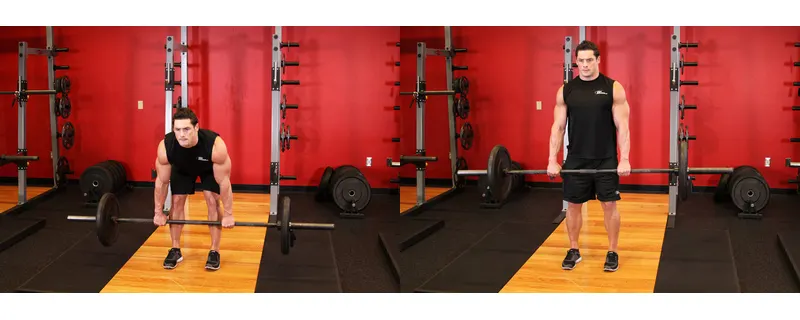
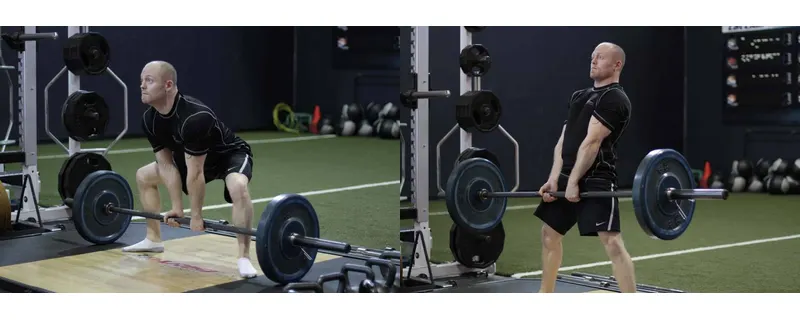
- While keeping the back as straight as possible, bend your knees, bend forward and grasp the bar using a medium (shoulder width) overhand grip. This will be the starting position of the exercise. Tip: If it is difficult to hold on to the bar with this grip, alternate your grip or use wrist straps.
- While holding the bar, start the lift by pushing with your legs while simultaneously getting your torso to the upright position as you breathe out. In the upright position, stick your chest out and contract the back by bringing the shoulder blades back. Think of how the soldiers in the military look when they are in standing in attention.
- Go back to the starting position by bending at the knees while simultaneously leaning the torso forward at the waist while keeping the back straight. When the weights on the bar touch the floor you are back at the starting position and ready to perform another repetition.
- Perform the amount of repetitions prescribed in the program.
General guidance, not medical advice. Start with a weight you can control for every rep, and stop if anything hurts. If you have an injury or health condition, ask a qualified professional first.