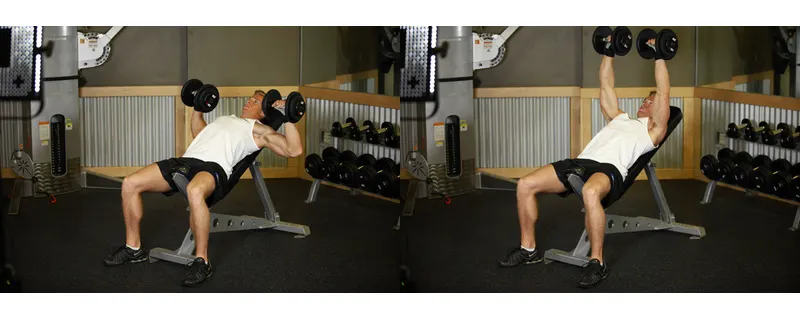
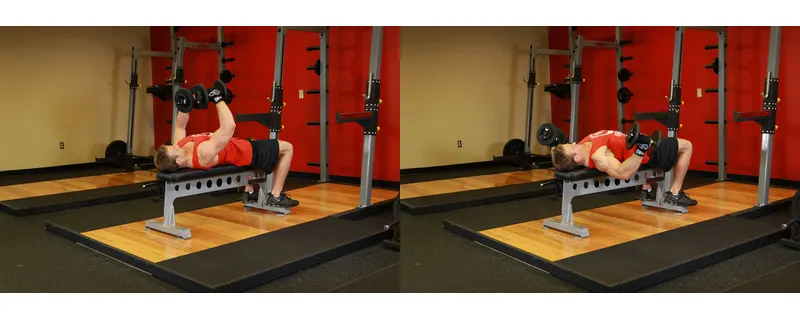
Dumbbell Bench Press
A bench press with a dumbbell in each hand. Each arm works on its own, so a stronger side can't carry a weaker one, and the dumbbells allow a slightly deeper, more natural path than a barbell. A good choice for home gyms and for training without a spotter.
Muscles & essentials
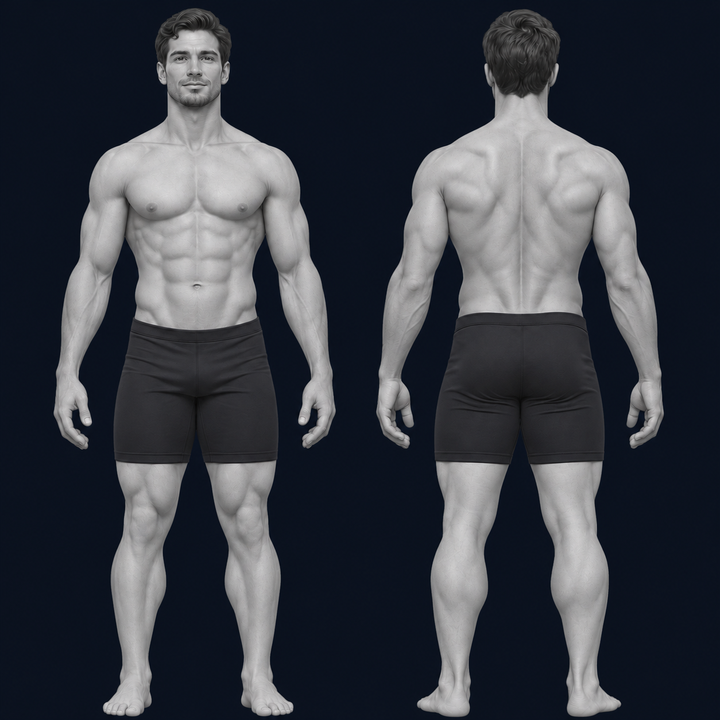
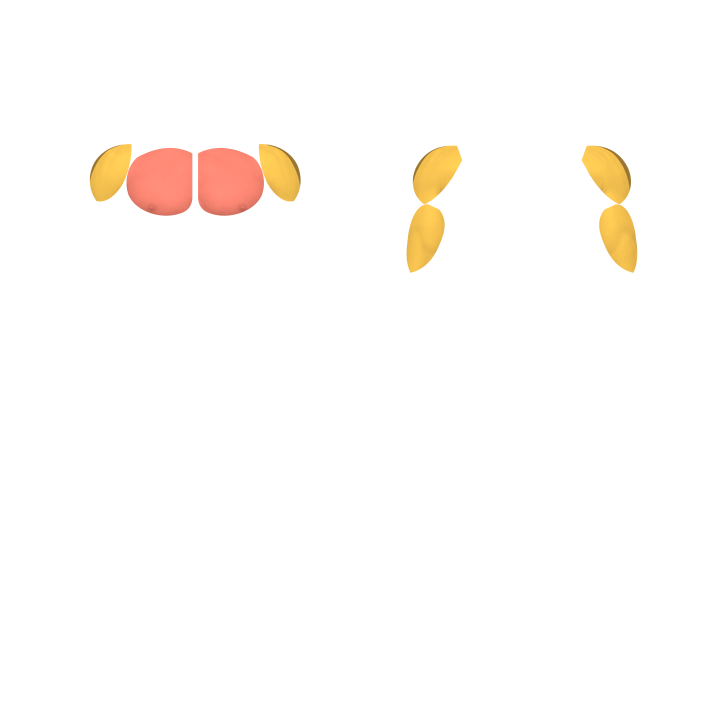
- Primary muscles
- chest
- Supporting muscles
- shoulders, triceps
- Difficulty
- Beginner
- Equipment
- Dumbbell
Muscle groups are a general guide. Difficulty describes coordination and skill, not workout intensity.
How to do the dumbbell bench press
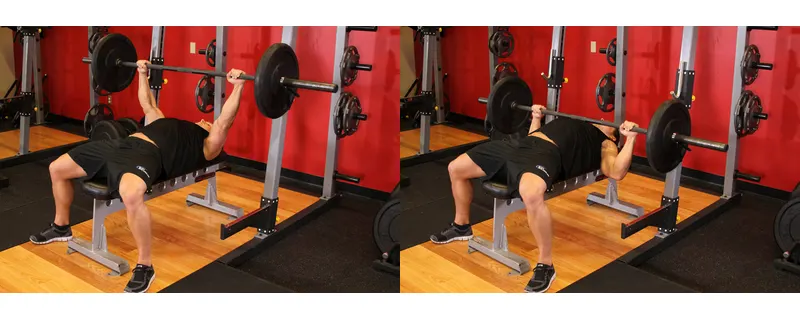
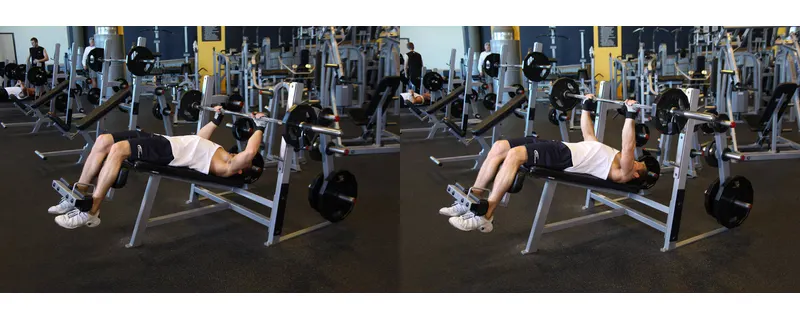
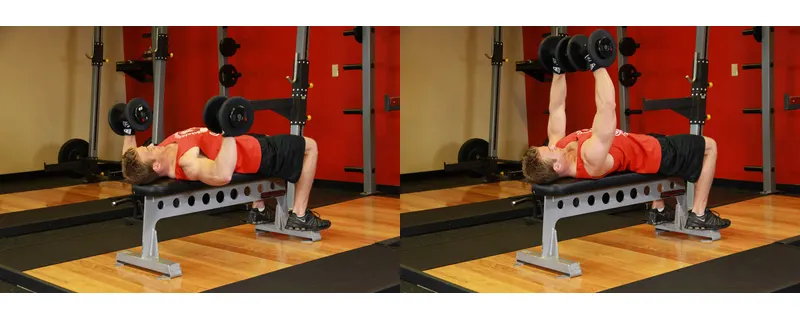
- Lie down on a flat bench with a dumbbell in each hand resting on top of your thighs. The palms of your hands will be facing each other.
- Then, using your thighs to help raise the dumbbells up, lift the dumbbells one at a time so that you can hold them in front of you at shoulder width.
- Once at shoulder width, rotate your wrists forward so that the palms of your hands are facing away from you. The dumbbells should be just to the sides of your chest, with your upper arm and forearm creating a 90 degree angle. Be sure to maintain full control of the dumbbells at all times. This will be your starting position.
- Then, as you breathe out, use your chest to push the dumbbells up. Lock your arms at the top of the lift and squeeze your chest, hold for a second and then begin coming down slowly. Tip: Ideally, lowering the weight should take about twice as long as raising it.
- Repeat the movement for the prescribed amount of repetitions of your training program.
General guidance, not medical advice. Start with a weight you can control for every rep, and stop if anything hurts. If you have an injury or health condition, ask a qualified professional first.